
About the Lebanese Federal Front
A democratic national coalition dedicated to Lebanon's transition to a viable federal system.
A Democratic Framework for Reform
The Lebanese Federal Front is a democratic national coalition formed by like-minded groups and individuals who share the conviction that Lebanon's centralized system has failed and that a transition to a federal system is a political and constitutional necessity.
We are a front of fronts: a coordination framework that brings together organizations, movements, and individuals who agree to act collectively in pursuit of constitutional federal reform. We are not a single political party, nor do we dissolve the identities of our members.
The Federal Front operates as a transitional constitutional vehicle, not as a permanent power structure. All authority within the Front is temporary, revocable, and rule-bound.

"Leadership is a function, responsibility is collective, and political legitimacy flows from adherence to rules and mandates."
Founding Document
Key Principles
Pluralism & Identity
Lebanon's cultural, ethnic, and religious diversity is central to its identity and must be preserved.
Federal Governance
Advocates for an ethno-geographic federal system managing diversity under one unified state.
Community Protection
Safeguards the existence, lands, and freedoms of all Lebanese groups.
System Reform
The unitary model since 1926 is deemed ineffective; federalism offers a stable alternative.
Foreign Policy
Calls for peaceful, independent relations with all nations.
Subsidiarity
Three levels of governance for efficient administration.
Founding Members
The visionaries behind the Lebanese Federal Front
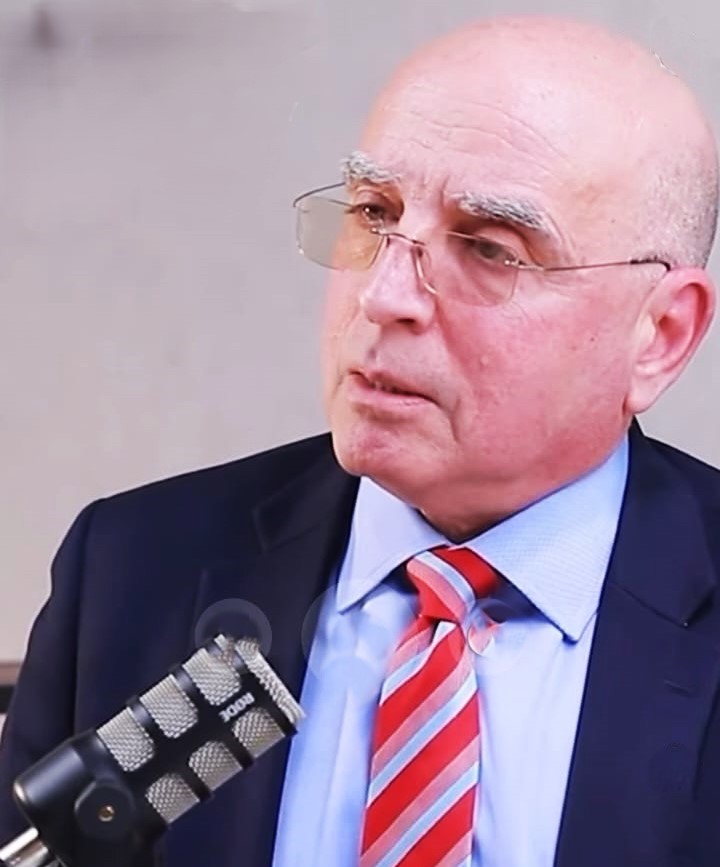
Founder
Tony Abi Samra
Brigadier General (Ret.)
Rose through the ranks of the Lebanese Army to Brigadier General. Commanded elite units like the Ranger Company and the Hostage Rescue & Special Operations Force. Later served as the Defense Attaché in Washington, D.C., facilitating bilateral military relations between Lebanon and the United States.
Held top-tier positions within the United Nations Department of Safety and Security (UNDSS) and UNHCR, managing security for entire regions (Asia-Pacific) and high-risk zones including Yemen, Jordan, Syria, Pakistan, and Somalia.
Currently serves as a Senior Advisor at the American Foundation for Educational Excellence, lecturing on leadership and conflict resolution for high-stakes environments.
What We Stand For
The foundational pillars from our Founding Document
Purpose & Vision
Promote Federalism for Justice & Stability
We advocate for a federal system as the path to achieving lasting justice and stability in Lebanon.
Lebanon's Identity
Preserve Multi-ethnic, Multi-religious Heritage
Preserving Lebanon's unique multi-ethnic and multi-religious heritage as our national identity.
Protection of Communities
Safeguard Lands & Freedoms
Protecting all Lebanese communities, safeguarding their lands and freedoms.
Critique of Current System
Unitary Model Deemed a Failure
Lebanon's centralized unitary model has failed. A fundamental restructuring is necessary.
Federalism or Partition
Federalism Preferred, Partition an Option
Federalism is preferred. If unachievable, partition remains a legitimate option.
Political Coordination
Unify Efforts for Dialogue & Reform
Unifying political efforts across communities for constitutional change.
Balanced Foreign Policy
Peaceful Relations, Independence
Maintaining peaceful relations while preserving Lebanon's sovereignty.
Subsidiarity Principle
Three-Level Governance
Federal, cantonal, and municipal governance levels.
Our Governance Commitments
Commitment to internal democratic decision-making processes
Governance by institutions, not personalities
Peaceful, timely, and periodic transfer of responsibility
All authority is temporary, revocable, and rule-bound
Preservation of each member's political identity and freedom of expression
Political legitimacy flows from adherence to rules and mandates
What We Are Promoting
A federal model designed for Lebanon's unique circumstances
Regional Governments
Elected regional assemblies with authority over local matters.
Fiscal Federalism
Fair revenue sharing allowing regions to manage local taxes.
Education Autonomy
Regional control over curricula while maintaining national standards.
Healthcare Management
Regional health authorities managing local healthcare needs.
Environmental Governance
Regional agencies protecting local ecosystems.
Security Coordination
Regional police with national coordination for cross-regional matters.
Benefits of Federalism
- Greater voice in local governance and decision-making
- More responsive public services tailored to local needs
- Preserved cultural and linguistic heritage
- Reduced bureaucracy and faster service delivery
Our Vision for Lebanon
We envision a Lebanon where federalism ensures justice and stability, where our multi-ethnic and multi-religious heritage is preserved and celebrated, and where three-level governance empowers citizens at federal, cantonal, and municipal levels.